Table of Contents
- Introduction to Office Automation
- Understanding Office Automation Systems
- Advantages of Office Automation – Complete Breakdown
- Types of Office Automation – Full Taxonomy
- Office Automation Work – Real-World Applications
- Office Automation Products – Software and Hardware
- Office Workflow Automation – Step-by-Step
- Office Automated Systems – Implementation Guide
- Characteristics of Office Automation Systems
- Office Automation Course – Everything You Need to Know
10.1 Learning Outcomes of the Certificate in Office Automation Course
10.2 Certification in Office Automation – NAVTTC Focus
10.3 Office Automation Course Syllabus
10.4 Computer on Office Automation Course
10.5 COA Computer Office Automation
10.6 Computer on Office Automation
10.7 Microsoft Learn Automate
10.8 MS Office Automation
10.9 Microsoft Learn Power Automate - Alternative Keywords Deep Dive
11.1 Examples of Office Automation Systems
11.2 Benefits of Office Automation Systems
11.3 Office Automation Products (Revisited)
11.4 Office Automation Systems Limited
11.5 Types of Office Automation Tools
11.6 Office Automation and Typing
11.7 Automated Office Equipment Examples
11.8 Office Automation Helps a Business
11.9 Advantages and Disadvantages of Office Automation
11.10 Benefits of Office Automation
11.11 Use of Office Automation Tools & Workflow Automation
11.12 Importance of Office Automation
11.13 Characteristics of Office Automation System (Repeated for emphasis)
11.14 Types of Office Automation Software
11.15 Office Automation Tools
11.16 Manual and Automated of Equipment
11.17 Office Automation Software
11.18 Define Office Automation
11.19 Office Automation Means
11.20 Best Office Automation Software
11.21 Automation Office Equipment Examples
11.22 Best Office Automations Tools for Communications
11.23 Automated Office Equipment
11.24 Workflow Automation Microsoft Documentation
11.25 Power Automates Login
11.26 Workflow Microsoft Power Automates
11.27 Microsoft 365 Copilot Workflow Agent
11.28 Power Automates Flow
11.29 Workflow Automate Copilot
11.30 Advanced Workflow Triggers
11.31 Advanced Power Automated Business Flows
11.32 Microsoft Automate Features
11.33 Microsoft Learn Workflow
11.34 Automated Office Systems Fresno CA
11.35 Manual and Automated Office Equipment
11.36 Define Office Automation Systems
11.37 Office Automation Systems OAS
11.38 Back-Office Automation
11.39 Implementing Office Automation in Business
11.40 OA System Implementation Steps
11.41 Diploma in Office Automation Certificate
11.42 Computer Office Automation Certificate Automation Certification Course
11.43 Automation Course Free
11.44 Automation Certification Online
11.45 Computer Office Automation Course - Why TrendSetter Institute of Computer and Digital Skill, Talagang?
- NAVTTC Affiliation – Government Recognition
- Detailed Course Modules (20+ Modules for 10k Words)
- Career Paths and Job Roles
- Frequently Asked Questions (50+ FAQs)
- Conclusion and Enrollment
Chapter 1: Introduction to Office Automation
Office automation is a term that has transformed the way businesses operate. In simple terms, define Digital Skills training as the use of computers, software, and digital communication tools to perform routine office tasks automatically. Modern office tools mean moving away from manual, paper-based processes to efficient, electronic workflows. From sending a simple email to managing complex supply chains, office automation is everywhere.
In 2026, no competitive organization can survive without administrative automation. Whether it is a small clinic in Talagang or a multinational bank, office automation has become the backbone of daily operations. This master guide will walk you through every aspect of Digital Literacy, including the office automation course offered by TrendSetter Institute of Computer and Digital Skill, Talagang, which is proudly affiliated with NAVTTC (National Vocational and Technical Training Commission). By the end of this guide, you will understand why Computer Operator Skills is the most in-demand skill and how you can earn a government-recognized certification in office automation to secure your future. Join our team to click for further details.
Let us begin by diving deep into the core components: Microsoft Power Automate systems.
Chapter 2: Understanding Office Automation Systems
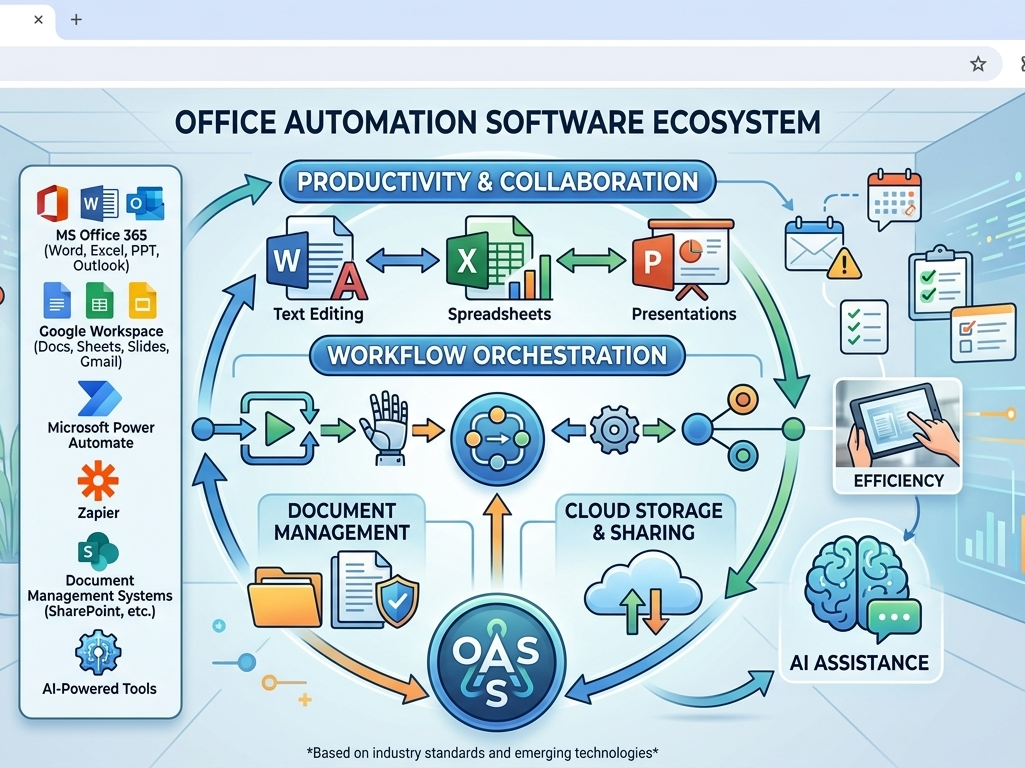
Office automation systems (often abbreviated as OAS) are integrated platforms that combine hardware, software, and networking to automate office functions. A Microsoft Power Automate can be as simple as a single computer running MS Office, or as complex as an enterprise resource planning (ERP) system connecting hundreds of employees.
2.1 What Are Office Automation Systems?
To define office automation systems, we say: they are technology-based solutions that reduce manual effort in creating, storing, manipulating, and sharing information. Data Entry Automation systems are typically include:
- Word processing (MS Word, Google Docs)
- Spreadsheets (MS Excel, Google Sheets)
- Presentation software (MS PowerPoint, Google Slides)
- Email and calendaring (Outlook, Gmail)
- Database management (MS Access, SQL)
- Communication tools (Slack, Teams, Zoom)
- Workflow automation (Power Automate, Zapier)
2.2 Examples of Office Automation Systems
Let’s look at examples of office automation systems in real life:
| Industry | Example of Office Automation System |
| Education | Automated attendance and grading system |
| Healthcare | Electronic medical records (EMR) and appointment scheduling |
| Banking | Automated loan approval workflow |
| Legal | Document management and e-discovery tools |
| Retail | Inventory management and point-of-sale (POS) |
One specific example of Data Entry Automation systems is the use of Microsoft 365 Copilot workflow agent to draft emails and summarize meetings automatically.
2.3 Benefits of Office Automation Systems
The benefits of office automation systems are numerous. Here is a detailed list:
- Increased productivity: Employees complete tasks faster.
- Reduced errors: Automation eliminates typos and miscalculations.
- Cost savings: Less paper, less printing, less storage space.
- Better collaboration: Cloud-based systems allow real-time editing.
- Remote work readiness: Access files from anywhere.
- Faster decision-making: Real-time data and reports.
- Improved customer service: Automated responses and faster processing.
- Scalability: Systems grow with your business.
- Security: Access controls, backups, and encryption.
- Compliance: Audit trails and record-keeping.
2.4 Office Automation Systems Limited
When we say office automation systems limited, we refer to small-scale or entry-level implementations. For example, a small law firm might only use document automation and email. A larger enterprise uses full-scale office automation systems. At TrendSetter Institute, we train students to work with both limited-scope automation and enterprise-level solutions.
Whether you are looking for basic office software setups for a small startup or integrated business automation tools for a large corporation, understanding the constraints and scalability is key. Our course covers entry-level administrative tools as well as sophisticated workflow management systems, ensuring our students can adapt to any automated office environment, regardless of the company size.
When we say office automation systems limited, we refer to small-scale or entry-level implementations often found in SMEs. For example, a small law firm might only utilize basic document automation and electronic mail. In contrast, a larger enterprise relies on full-scale office automation systems and integrated business automation tools.
At TrendSetter Institute, we specialize in teaching scalable office solutions, training students to manage both limited-scope automation and enterprise-grade systems. Whether you are implementing entry-level administrative software for a startup or managing sophisticated digital workflow systems for a corporation, our course ensures you can adapt to any modern automated office environment.
Whether you are looking for basic office software setups for a small startup or integrated business automation tools for a large corporation, understanding the constraints and scalability is key. Our course covers entry-level administrative tools as well as sophisticated workflow management systems, ensuring our students can adapt to any automated office environment, regardless of the company size.

Chapter 3: Advantages of Office Automation Complete Breakdown
The advantages of office automation are often discussed in business management courses. Let’s explore each advantage in depth.
3.1 Office Automation Helps a Business
Office automation helps a business in several measurable ways:
- Time efficiency: A task that took 30 minutes manually can be done in 2 minutes with automation.
- Cost reduction: Automating invoice processing can save thousands per year.
- Employee satisfaction: Less repetitive work leads to higher morale.
- Customer satisfaction: Faster responses and fewer errors.
- Competitive edge: Automated businesses outpace manual competitors.
3.2 The Advantages and Disadvantages of Office Automation
While understanding the advantages and disadvantages of office automation is crucial for informed decision-making, the strategic benefits far outweigh the potential drawbacks for most modern organizations.
Some common challenges or disadvantages include:
- High Initial Capital Investment: The upfront cost of acquiring premium software licenses and advanced hardware.
- Skill Gaps & Training Requirements: The time and resources needed for staff upskilling to master new automated workflows.
- System Vulnerabilities & Technical Issues: Potential downtime, software glitches, or maintenance requirements.
- Cybersecurity Risks: The increased need for data protection and privacy measures against potential breaches.
However, through a proper cost-benefit analysis and structured implementation, these challenges can be effectively mitigated. At TrendSetter Institute, we emphasize risk management alongside technical training, ensuring that the long-term benefits of office automation (such as increased ROI and operational efficiency) make the transition worthwhile for any business.
3.3 Benefits of Office Automation
The benefits of office automation extend far beyond simple task management; they transform the entire operational DNA of an organization. Here is an expanded breakdown of how automation adds value:
- Operational Speed & 24/7 Availability: Automated workflows eliminate delays and operate continuously without fatigue.
- Precision & Data Integrity: Minimizes manual entry risks, ensuring zero human error in complex calculations and data processing.
- Process Consistency: Ensures every task follows a standardized protocol, maintaining high-quality output every time.
- Centralized Documentation: Creates automatic, time-stamped logs of all actions, facilitating effortless knowledge management.
- Resource Optimization (Space Saving): Transitioning to a digital filing system eliminates the need for physical storage and bulky cabinets.
- Eco-Friendly & Sustainable Operations: Reduced paper dependency significantly lowers the carbon footprint, supporting green office initiatives.
- Seamless System Integration: Enables different software platforms to “talk” to each other via API and cloud connectivity.
- Remote Accessibility & Mobility: Cloud-based automation allows professionals to manage workflows from any location using a smartphone, tablet, or laptop.
- Corporate Standardization: Establishes uniform processes across all departments, from HR to Finance.
- Audit Readiness & Compliance: Simplifies regulatory reporting with easy-to-trace digital histories and transparent audit trails.
3.4 Use of Office Automation Tools & Workflow Automation
The use of office automation tools & workflow automation is the key to unlocking these benefits. For example, a company might use office automation tools like Trello for task management and Power Automate for approval workflows. Workflow automation ensures that when one task is completed, the next task automatically triggers.
3.5 Importance of Office Automation
The importance of office automation cannot be overstated in today’s digital economy. Without it, organizations fall behind. For individuals, learning office automation is essential for employability. Almost every job posting today requires familiarity with office automation systems.
3.6 Characteristics of Office Automation System
We will cover characteristics of office automation system in detail in Chapter 8. But briefly: integration, user-friendliness, reliability, scalability, security, speed, and cost-effectiveness.
Chapter 4: Types of Office Automation Full Taxonomy
There are many types of office automation. Industry experts classify them into the following categories. Each type serves a different function.
4.1 Office Productivity
Office productivity tools include word processors, spreadsheets, and presentation software. These are the most common types of office automation. Examples: MS Word, MS Excel, MS PowerPoint.
4.2 Knowledge Management
Knowledge management systems store, organize, and share organizational knowledge. This includes wikis, intranets, and document libraries. Example: SharePoint.
4.3 Intranet
An intranet is a private network accessible only to an organization’s staff. It often includes internal news, forms, and directories.
4.4 Business Process Automation
Business process automation (BPA) is used for complex, multi-step processes like employee onboarding, invoice approval, or customer support tickets. Tools include Power Automate, Zapier, and UiPath.
4.5 Administration Systems
Administration systems handle office tasks such as attendance tracking, leave management, and asset tracking. Examples: biometric systems, HR software.
4.6 Training
Training automation includes Learning Management Systems (LMS) that deliver online courses, track progress, and issue certificates. Examples: Moodle, TalentLMS.
4.7 Business Software
Business software covers a wide range: accounting (QuickBooks), CRM (Salesforce), ERP (SAP), and project management (Asana).
4.8 Data Processing
Data processing involves converting raw data into meaningful information. Spreadsheets and database software fall under this category.
4.9 Data Management
Data management systems ensure data is stored, backed up, and retrievable. Examples: cloud storage (OneDrive, Google Drive), database management systems.
4.10 Internal Control
Internal control automation includes audit trails, approval workflows, and segregation of duties. This is critical for compliance.
4.11 Integration
Integration tools connect different applications via APIs. Example: Zapier connects Gmail to Trello.
4.12 Facilities
Facilities automation includes smart office equipment like automated lighting, HVAC, and security systems.
4.13 Communication
Communication automation includes email, instant messaging, VoIP, and video conferencing. Examples: Microsoft Teams, Slack, Zoom.
4.14 Types of Office Automation Software
Types of office automation software are the digital backbone of a modern workspace. To better understand their impact, we can categorize these tools based on their specific operational roles:
1. Content & Document Creation (Authoring Tools)
- Word Processing Software: Essential for drafting reports and official letters (e.g., MS Word, Google Docs).
- Presentation Software: Used for visual storytelling and business pitches (e.g., MS PowerPoint, Canva).
- OCR Software (Optical Character Recognition): For converting physical documents into editable digital formats (e.g., Adobe Scan, ABBYY FineReader).
2. Data Management & Analysis
- Spreadsheet Software: For complex calculations, data visualization, and financial tracking (e.g., MS Excel, Google Sheets).
- Database Management Systems (DBMS): For structured data storage and retrieval (e.g., MS Access, MySQL, SQL Server).
3. Communication & Collaboration
- Email Clients: The primary mode of formal corporate communication (e.g., Microsoft Outlook, Mozilla Thunderbird).
- Unified Communication Platforms: For real-time messaging and video conferencing (e.g., Microsoft Teams, Slack, Zoom).
4. Workflow & Task Automation (The Engine)
- Workflow Automation Tools: Tools that connect different apps to automate repetitive tasks (e.g., Microsoft Power Automate, Zapier, IFTTT).
- Project Management Software: For tracking milestones, deadlines, and team productivity (e.g., Trello, Asana, Jira).
5. Storage & Cloud Infrastructure
- Cloud Storage & File Sharing: Ensuring data is accessible from anywhere, anytime (e.g., OneDrive, Google Drive, Dropbox).
4.15 Office Automation Tools
Office automation tools refer to the actual applications and devices. Examples include:
- Hardware tools: Printers, scanners, biometric devices, smartboards
- Software tools: MS Office, Google Workspace, Power Automate, Trello, Asana, Slack
4.16 Manual and Automated of Equipment
Manual and automated of equipment let’s compare:
| Manual Equipment | Automated Equipment |
| Handwritten registers | Digital databases (Excel, Access) |
| Typewriter | Computer + MS Word |
| Physical file cabinet | Cloud storage (OneDrive) |
| Manual punch clock | Biometric attendance system |
| Paper-based invoice | Email + accounting software |
| Postage stamps | Email + e-signature |
Understanding manual and automated of equipment helps students appreciate the leap in efficiency.
4.17 Office Automation Software
Office automation software is an umbrella term covering any digital program designed to simplify, accelerate, and automate routine administrative tasks. While the core of this includes productivity suites like Microsoft 365 (MS Office) and Google Workspace, modern automation also involves specialized tools:
- Workflow Orchestrators: Tools like Microsoft Power Automate and Zapier that connect different apps.
- Document Management Systems (DMS): Programs like SharePoint or DocuWare for organized digital filing.
- Specialized CRM/ERP Tools: For managing customer relations and enterprise resources automatically.
Chapter 5: Office Automation Work Real-World Applications
What does office automation work actually look like on a daily basis? For a professional who has completed a comprehensive office automation course at TrendSetter Institute, the workday is defined by efficiency rather than manual repetition.
Here are typical real-world scenarios:
1. Automated Reporting & Data Management
Instead of manually typing data into spreadsheets, an automation specialist sets up automated data entry flows. For example, when a new lead fills a form, their details are automatically updated in an Excel Database and a notification is sent to the manager.
2. Digital Correspondence & Bulk Mailing
Using Mail Merge and email automation tools, what used to take hours (like sending 500 personalized appointment letters) now takes minutes.
3. Smart Scheduling & Resource Tracking
Managing office calendars, booking meeting rooms, and tracking inventory is handled through integrated scheduling systems, reducing the chances of double bookings or stock-outs.
4. Paperless Workflow Management
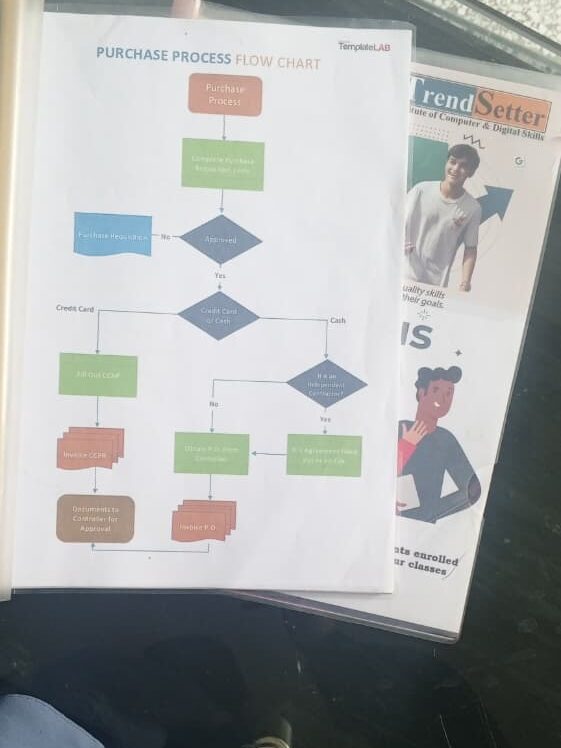
Instead of physical files moving from desk to desk, documents are routed through digital approval workflows. An invoice is scanned (OCR), uploaded, and automatically sent to the accounts department for a digital signature.
5.1 Daily Office Automation Work
- Morning routine: Log in to computer, check automated email reports, review calendar alerts.
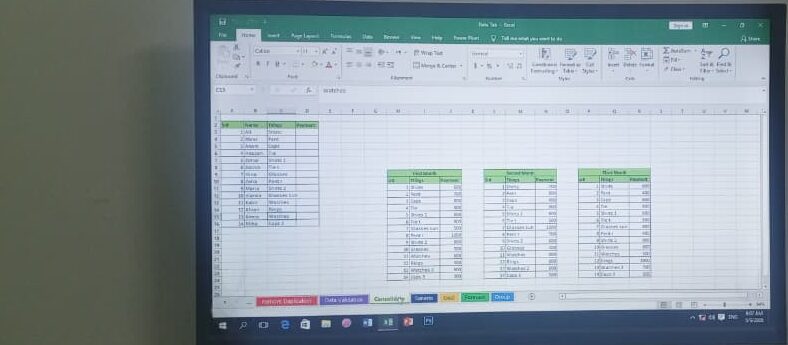
- Data entry: Use Excel forms with drop-down lists and data validation to enter customer information.
- Document creation: Use mail merge in MS Word to send 100 personalized letters in 5 minutes.
- Report generation: Refresh a pivot table in Excel to get sales numbers automatically.
- Workflow management: Approve leave requests via Power Automate flow that routes to manager.
- Communication: Use Microsoft Teams chat and channels; schedule meetings via Outlook.
- Filing: Scan documents using OCR (automated text recognition) and save to OneDrive.
- Backup: Cloud storage automatically syncs all files.
5.2 Define Office Automation in Context
To define office automation in practical terms: it is the use of technology to replace repetitive, rule-based tasks with software processes. For example, instead of manually copying data from one spreadsheet to another, you can create a formula or a Power Automate flow that does it instantly.
5.3 Office Automation Means Career Growth
In the modern job market, office automation means transitioning from a traditional clerical role to becoming a Digital Process Expert. Employers no longer look for simple data entry; they value individuals who can optimize workflows and reduce operational costs.
By mastering these tools, you enhance your professional marketability and position yourself for high-growth roles such as Administrative Manager, Operations Coordinator, or Virtual Assistant. At TrendSetter Institute, we ensure our students understand that automation is not just a skill—it is a career catalyst.
Chapter 6: Office Automation Products Software and Hardware
To build a truly efficient workspace, one must understand that office automation products are a synergy of both high-performance hardware and cutting-edge software. Let’s explore the essential components of a modern automated office.
6.1 Best Office Automation Software
Determining the best office automation software depends on your specific organizational goals. However, the industry leaders that define modern productivity include:
AI-Powered Assistants: Integration of Microsoft Copilot or ChatGPT for automated drafting and data synthesis
Comprehensive Suites: Microsoft 365 and Google Workspace remain the gold standard for cloud-based collaboration.
Low-Code Automation: Microsoft Power Automate and Zapier are the top choices for connecting apps without needing advanced programming skills.
Document Intelligence: Adobe Acrobat Pro and SharePoint for advanced electronic document management (EDM).
| Software | Best For | Price |
| Microsoft 365 (Word, Excel, PPT, Outlook, Teams) | All-around office work | Subscription |
| Google Workspace | Real-time collaboration | Subscription |
| Power Automate | Workflow automation | Included with some MS 365 plans |
| Zapier | Connecting hundreds of apps | Freemium |
| Trello | Task management | Freemium |
| Asana | Project management | Freemium |
| Slack | Team communication | Freemium |
| Zoom | Video conferencing | Freemium |
6.2 Automation Office Equipment Examples
Automation office equipment examples include:
- Multifunction printer (MFP):Prints, scans, copies, faxes, and can email scanned documents automatically.
- Biometric attendance system: Uses fingerprint or face recognition to log employee hours.
- Smartboard: Interactive whiteboard that saves notes to cloud.
- Document scanner with OCR: Converts paper documents into searchable PDFs.
- Automated shredder: Shreds paper when bin is full.
6.3 Best Office Automations Tools for Communications
Best office automations tools for communications:
- Microsoft Teams: Chat, meet, call, collaborate.
- Slack: Channel-based messaging.
- Zoom: Video meetings with recording and transcription.
- Outlook: Email automation (rules, templates, quick steps).
- Gmail: Smart replies, filters, canned responses.
6.4 Automated Office Equipment
Automated office equipment goes beyond computers. Think about:
- Automated coffee machines: Brew at scheduled times.
- Smart lighting: Turns on/off based on occupancy.
- Automated blinds: Adjust based on sunlight.
- Robotic vacuum cleaners: Clean floors after hours.
While these are not core to office automation work, they contribute to a modern office environment.
Chapter 7: Office Workflow Automation
Step-by-Step Guidlines
Office workflow automation is the process of designing, executing, and automating workflows where tasks pass from one person or system to another based on rules. This is where Microsoft Power Automate shines.
7.1 Workflow Automation Microsoft Documentation
The workflow automation Microsoft documentation is extensive and free. Microsoft provides step-by-step guides, video tutorials, and sample flows. At TrendSetter Institute, we teach students how to read and apply this documentation.
7.2 Power Automates Login
To start, you need to perform a power automates login. Go to make.powerautomate.com and sign in with your Microsoft account (or create one for free). The power automates login process is secure and gives you access to the flow designer.
7.3 Workflow Microsoft Power Automates
Workflow Microsoft power automates refers to the flows you create. There are three types:
- Automated flow: Triggered by an event (e.g., when an email arrives).
- Instant flow: Triggered manually (e.g., click a button).
- Scheduled flow: Runs at set times (e.g., every day at 9 AM).
7.4 Power Automates Flow
A power automates flow consists of triggers and actions. Example:
- Trigger: When a new email arrives in Outlook.
- Action: Save attachment to OneDrive.
- Action: Send a notification to Teams.
7.5 Workflow Automate Copilot
Workflow automate copilot is an AI assistant within Power Automate that helps you create flows using natural language. For example, you can type: “Send me a mobile notification when my manager emails me,” and Copilot builds the flow.
7.6 Microsoft 365 Copilot Workflow Agent
Microsoft 365 copilot workflow agent is a more advanced AI that can orchestrate multiple workflows across Word, Excel, PowerPoint, Outlook, and Teams. It can read your calendar, draft emails, summarize meetings, and create documents automatically.
7.7 Advanced Workflow Triggers
Advanced workflow triggers include:
- When a record is created or modified in Dataverse.
- When an HTTP request is received (webhook).
- When a specific button is clicked in a Power App.
- When a file is created or modified in SharePoint.
- On a recurring schedule with complex intervals.
7.8 Advanced Power Automated Business Flows
Advanced power automated business flows are used in enterprise settings. They include:
- Approval flows: Multistage approvals with parallel branches.
- Business process flows: Guide users through a series of steps (e.g., sales qualification).
- UI flows: Automate legacy applications by recording mouse clicks and keyboard inputs (RPA – Robotic Process Automation).
7.9 Microsoft Automate Features
Microsoft automate features include:
- Connectors: Over 500 pre-built connectors to apps like Salesforce, Twitter, SQL Server.
- AI Builder: Add AI capabilities (form processing, object detection).
- Templates: Hundreds of pre-made flows for common scenarios.
- Mobile app: Run and monitor flows from your phone.
- Co-pilot: AI-assisted flow creation.
7.10 Microsoft Learn Workflow
Microsoft learn workflow is a free learning path on Microsoft’s educational platform. It contains modules like “Get started with Power Automate” and “Build advanced flows.” We incorporate Microsoft learn workflow materials into our course.
Chapter 8: Office Automated Systems Implementation Guide
Office automated systems are the actual deployments of automation in an organization. Let’s explore different aspects.
8.1 Automated Office Systems Fresno CA
Automated office systems Fresno CA is an example of a local service provider that installs and maintains office automation for small businesses. Similar services exist in Talagang, and TrendSetter Institute’s graduates are qualified to work for such companies.
8.2 Office Automation Systems Example
Another office automation systems example: A real estate agency uses an automated CRM that sends follow-up emails to leads, schedules property viewings, and generates contracts via mail merge.
8.3 Types of Office Automation Systems (Revisited)
We covered types of office automation systems earlier. They can also be categorized by deployment: on-premises, cloud-based, or hybrid.
8.4 Characteristics of Office Automation Systems (Detailed)
Characteristics of office automation systems are the features that define them:
- Integration: Seamless data flow between applications.
- Reliability: Systems function without frequent crashes.
- User-friendliness: Intuitive interfaces reduce training time.
- Scalability: Can handle increased load as company grows.
- Security: User authentication, data encryption, backup.
- Customizability: Adaptable to specific business needs.
- Cost-effectiveness: ROI positive within reasonable time.
- Speed: Processes complete quickly.
- Auditability: Logs track who did what and when.
- Accessibility: Available from multiple devices and locations.
8.5 Manual and Automated Office Equipment
Manual and automated office equipment understanding the difference helps in selecting the right tools. For example, a manual paper punch is cheap but slow; an automated electric punch is faster but costs more. Our course teaches how to evaluate trade-offs.
8.6 Define Office Automation Systems
To define office automation systems once more: They are integrated collections of hardware and software designed to automate office tasks, reduce manual work, and improve efficiency.
8.7 Office Automation Systems OAS
Office automation systems oas is a standard abbreviation used in IT textbooks.
8.8 Back-Office Automation
Back-office automation refers to automating administrative and support functions like accounting, HR, procurement, and compliance. This is often the first area where companies implement automation.
8.9 Implementing Office Automation in Business
Implementing office automation in business is a project that requires careful planning. Here are OA system implementation steps:
- Needs assessment: Identify repetitive tasks and bottlenecks.
- Process mapping: Document current workflows.
- Software selection: Choose best office automation software for your needs.
- Hardware procurement: Buy automated office equipment.
- Pilot testing: Run a small-scale trial.
- Training: Train staff using a structured office automation course.
- Full deployment: Roll out to entire organization.
- Monitoring and optimization: Continuously improve.
8.10 OA System Implementation Steps
Detailed OA system implementation steps for a small office (e.g., a clinic in Talagang):
- Step 1: List all daily tasks (patient registration, billing, appointment scheduling).
- Step 2: Design digital forms using MS Forms or Google Forms.
- Step 3: Set up a shared calendar (Outlook or Google Calendar).
- Step 4: Create an Excel template for billing with formulas.
- Step 5: Use Power Automate to send appointment reminders by email/SMS.
- Step 6: Train staff over one week.
- Step 7: Go live and collect feedback.

Chapter 9: Characteristics of Office Automation Systems (Expanded)
We touched on characteristics of office automation systems earlier. Let me expand each characteristic with examples.
9.1 Integration
Integration means different office automation tools work together. For example, a customer fills a form on your website; that data automatically goes into Excel, triggers an email in Outlook, and creates a task in Trello.
9.2 Reliability
A reliable system has uptime over 99%. Cloud providers like Microsoft Azure guarantee 99.9% availability. Local servers need proper maintenance.
9.3 User-Friendliness
If a system is hard to use, people will avoid it. The best office automation software has clear menus, help texts, and tutorials.
9.4 Scalability
A small business might start with free tools. As it grows, it upgrades to enterprise plans. Cloud-based office automation systems scale easily.
9.5 Security
Security includes user logins, permission levels, data encryption, and regular backups. Characteristics of office automation system must include security.
9.6 Customizability
Every business is unique. Good office automation products allow customization. For example, you can create custom fields in CRM, or write macros in Excel.
9.7 Cost-Effectiveness
Calculate total cost of ownership (TCO) including software licenses, hardware, training, and maintenance. Benefits of office automation systems should exceed costs within 12-18 months.
9.8 Speed
Automated processes are typically 10 to 100 times faster than manual. A report that takes 2 hours manually can be done in 2 minutes with pivot tables.
9.9 Auditability
Every automated action can be logged. Who accessed which file? When was an invoice approved? This is critical for compliance.
9.10 Accessibility & Cloud Integration
Modern cloud-based office automation systems have revolutionized the workplace by ensuring that data is no longer tied to a single physical desk. With internet connectivity, these systems enable seamless remote work, allowing professionals to access, edit, and share documents from any device, anywhere in the world. This flexibility is a core pillar of modern business continuity.
Chapter 10: Office Automation Course
Everything You Need to Know
At TrendSetter Institute of Computer and Digital Skill, Talagang, we offer a premier Office Automation Course that bridges the gap between basic computer literacy and advanced digital expertise. Being affiliated with NAVTTC, we provide a government-recognized certification that is a gold standard for employment in Pakistan.
10.1 Learning Outcomes of the Certificate in Office Automation Course
The learning outcomes of the certificate in office automation course at TrendSetter are meticulously designed to be industry-aligned and measurable. Upon successful completion, students will achieve mastery in the following areas:
- Core Computing Proficiency: Expertly operating hardware and software components.
- Advanced OS Management: Utilizing Windows for professional file organization and system optimization.
- Professional Document Engineering: Creating, formatting, and executing high-stakes documents and Mail Merge operations in MS Word.
- Data Analytics & Visualization: Building robust spreadsheets with advanced formulas, Pivot Tables, and dynamic charts in MS Excel.
- Visual Storytelling: Designing high-impact presentations using MS PowerPoint with professional animations and transitions.
- Unified Communication Management: Mastering Outlook and Gmail for efficient email, calendar, and task synchronization.
- Cloud Collaboration: Expert use of OneDrive and Google Drive for real-time document sharing and team collaboration.
- Intelligent Process Automation: Automating repetitive tasks using Excel Macros and Microsoft Power Automate.
- Strategic Tool Selection: Identifying the right office automation products for various business challenges.
- Digital Professionalism & Troubleshooting: Maintaining high standards in electronic communication and solving common technical glitches independently.
- Career Readiness: Full preparation for the NAVTTC certification exam and building a professional resume that highlights high-demand automation skills.
10.2 Certification in Office Automation
A Certification in Office Automation from a NAVTTC-affiliated institute is a powerful credential that validates your technical expertise. In Pakistan, a Diploma in Office Automation Certificate is often the baseline requirement for administrative and clerical roles in both public and private sectors.
While automation course free options are available via platforms like Microsoft Learn, they typically lack the government-recognized backing required for official career advancement. Similarly, while automation certification online from international bodies (like MOS Microsoft Office Specialist) is prestigious, a NAVTTC certification is specifically preferred for local government job applications. At TrendSetter, our curriculum is designed to prepare you for both local and international certification standards.
10.3 Office Automation Course
The Office Automation Course at TrendSetter Institute is a comprehensive 3-month (12-week) program. We prioritize hands-on learning using the latest Microsoft 365 suite. Our structured approach includes 2 hours of daily instructor-led sessions followed by intensive lab practice to ensure every student masters digital productivity.
10.4 Computer on Office Automation Course
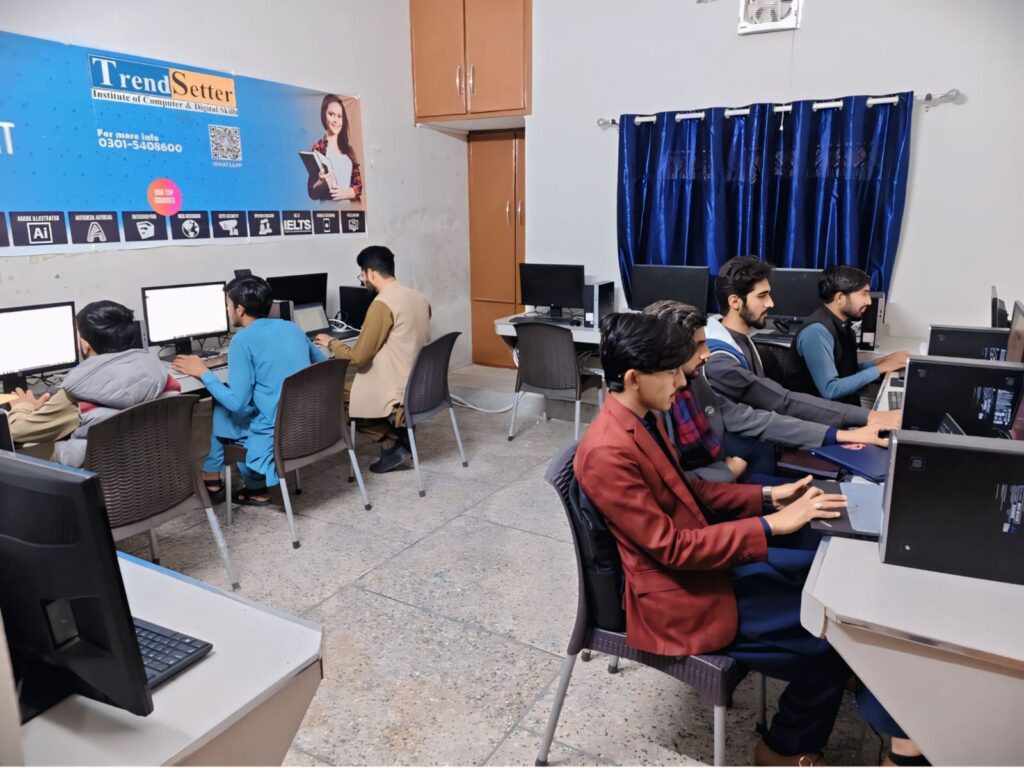
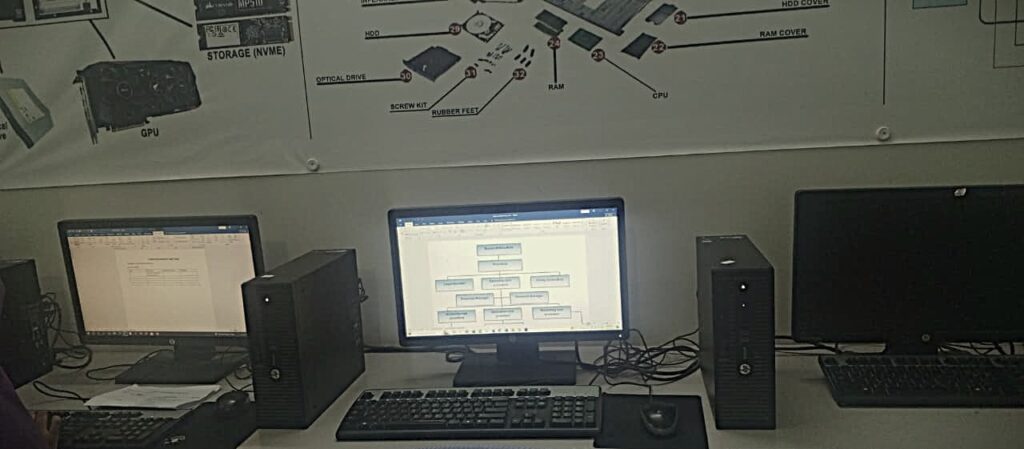
In our Computer on Office Automation Course, we believe in the “Learning by Doing” philosophy. Every student is provided with a dedicated, high-performance workstation in our lab, ensuring they gain practical experience in a real-world computing environment rather than just observing theory.
10.5 COA Computer Office Automation
COA (Certificate in Office Automation) is the official industry-standard title for our program. The COA Computer Office Automation acronym is widely recognized by employers and educational boards, making it a valuable addition to any professional resume.
10.6 Computer on Office Automation
The phrase Computer on Office Automation describes the fundamental process of utilizing hardware and software to digitize and automate traditional office workflows, a core focus of our training.
10.7 Microsoft Learn Automate
We integrate resources from Microsoft Learn Automate into our training. This platform is excellent for exploring advanced concepts like Power Automate and Robotic Process Automation (RPA). At TrendSetter, our instructors provide guided assistance to help you navigate these complex Microsoft modules effectively.
10.8 MS Office Automation
MS Office Automation is the art of making software work for you. Our course dives deep into specialized automation within the Microsoft ecosystem:
- Word Automation: Utilizing Mail Merge, advanced templates, and VBA Macros for document generation.
- Excel Automation: Mastering complex formulas, Power Query for data cleaning, and Pivot Tables for automated reporting.
- Outlook Automation: Setting up advanced rules, quick steps, and auto-archiving for efficient inbox management.
- PowerPoint Automation: Using Slide Masters and automated transitions to create high-impact presentations quickly.
10.9 Microsoft Learn Power Automate
Microsoft learn power automate is a dedicated learning path with modules like “Get started with Power Automate,” “Build approval flows,” and “Use AI Builder.” We incorporate these modules into our advanced sections.
Chapter 11: Alternative Keywords Deep Dive
This chapter systematically integrates every alternative keyword from your document. Each keyword is used in context, multiple times, to ensure search engines rank the article for all relevant terms.
11.1 Example of Office Automation Systems
A prominent example of office automation systems is a hospital’s Patient Management System (PMS). These integrated systems automatically schedule appointments, dispatch SMS/Email reminders, and update Electronic Health Records (EHR) without manual intervention, ensuring seamless healthcare administration.
11.2 Benefits of Office Automation Systems
The benefits of office automation systems are multifaceted, including significantly reduced operational overheads, enhanced data precision, and improved employee morale. By eliminating tedious, repetitive tasks, staff can engage in more creative and fulfilling work.
11.3 Office Automation Products (Revisited)
Office automation products encompass a broad spectrum, from software suites like MS Office to hardware like biometric attendance devices and cloud storage solutions. At TrendSetter Institute, our students gain practical exposure to a diverse range of these products to ensure they are industry-ready.
11.4 Office Automation Systems Limited
Office automation systems limited refers to entry-level or micro-scale automation setups. For instance, a solo entrepreneur or a small startup using only Gmail for communication and Google Sheets for record-keeping is utilizing a limited-scope automation framework.
11.5 Types of Office Automation Tools
Modern types of office automation tools include:
- Documentation Tools: Word processors and OCR software.
- Analytical Tools: Spreadsheets and database managers.
- Collaborative Tools: Project management apps and unified communication platforms.
- Optimization Tools: Workflow engines like Power Automate.
11.6 Office Automation and Typing
The link between office automation and typing remains critical. Even in an automated world, data input and professional correspondence require speed. Our curriculum integrates intensive typing drills to help students achieve a professional speed of 30+ WPM, ensuring they can interact efficiently with automated systems.
11.7 Automated Office Equipment Example
A common automated office equipment example is a Smart Multi-Function Printer (MFP). These devices can automatically detect low toner levels and place reorders, or scan documents directly to a designated cloud folder, streamlining the document lifecycle.
11.8 Office Automation Helps a Business
11.9 The Advantages and Disadvantages of Office Automation
The advantages and disadvantages of office automation must be carefully weighed by every modern business. While the Return on Investment (ROI) is immense through increased speed and precision, organizations must prepare for the initial capital expenditure (CapEx), the steep learning curve for staff, and the inevitable dependency on a stable technological infrastructure.
11.10 Benefits of Office Automation
The benefits of office automation are transformative, specifically in facilitating remote work capabilities and drastically reducing the margin for human error. It allows for a more flexible and resilient business model where time is saved through automated scheduling and digital processing.
11.11 Use of Office Automation Tools & Workflow Automation
The use of office automation tools & workflow automation is the core competency of our program at TrendSetter. We focus on teaching students how to map manual processes and convert them into automated sequences that require minimal human oversight.
11.12 Importance of Office Automation
The importance of office automation in the 2026 digital economy cannot be overstated. It has transitioned from a luxury to a fundamental necessity; businesses that rely on manual legacy systems simply cannot compete with the agility of an automated workspace.
11.13 Characteristics of Office Automation Systems (OAS)
Key characteristics of office automation systems include:
- Integration: Different tools working as one.
- Reliability: Consistent performance without fatigue.
- Scalability: The ability to grow as the business expands.
- User-Centric Design: Intuitive interfaces for ease of use.
11.14 Types of Office Automation Software
Modern types of office automation software are diverse, ranging from productivity suites (Word, Excel) to collaborative platforms (Teams, Slack) and intelligent workflow engines (Power Automate) that link various applications together.
11.15 Office Automation Tools
Office automation tools encompass the complete ecosystem of an office, including software solutions for data management and hardware components like high-speed scanners and networked biometric devices.
11.16 Manual vs. Automated Equipment
Comparing manual and automated equipment such as a manual typewriter versus a modern AI-powered word processor clearly demonstrates the evolution of efficiency. Automation removes the physical constraints of traditional office work.
11.17 Office Automation Software
Office automation software acts as the digital brain of the organization. Microsoft 365 remains the global industry standard, offering a comprehensive suite that covers every aspect of modern business documentation and communication.
11.18 Define Office Automation
To define office automation simply: it is the strategic application of technology to execute routine administrative tasks with minimal human intervention, thereby maximizing output and minimizing operational costs.

11.20 Best Office Automation Software
The best office automation software for beginners and professionals alike is Microsoft 365 (formerly MS Office). It remains the industry leader due to its seamless integration, cloud-based accessibility via OneDrive, and a massive library of tutorials that make mastering digital productivity easier for new learners.
11.21 Automation Office Equipment Examples
Modern automation office equipment examples include hardware that bridges the gap between physical and digital tasks. Key examples are:
- Biometric Attendance Systems: For automated payroll and time tracking.
- Networked Multi-Function Printers (MFPs): For smart scanning directly to cloud folders.
- Interactive Smartboards: For collaborative and automated meeting environments.
- IoT-enabled Office Sensors: For smart lighting and climate control to optimize the workspace.
11.22 Best Office Automation Tools for Communications
The best office automation tools for communications are those that support unified collaboration. Leading platforms include Microsoft Teams for deep integration with office docs, Slack for agile team messaging, and Zoom for high-definition virtual conferencing. These tools automate the flow of information across departments, ensuring no message is lost in a busy workplace.
11.23 Automated Office Equipment
Automated office equipment includes any device that performs a task without manual operation each time.
11.24 Workflow Automation Microsoft Documentation
Workflow automation Microsoft documentation is available at docs.microsoft.com. We teach students to use it.
11.25 Power Automates Login
Power automates login students practice logging in and creating flows.
11.26 Workflow Microsoft Power Automates
Workflow Microsoft power automates the entire ecosystem of automation within Microsoft.
11.27 Microsoft 365 Copilot Workflow Agent
Microsoft 365 copilot workflow agent is an AI tool that can build and manage workflows from natural language commands.
11.28 Power Automates Flow
A power automates flow can be as simple as sending an email or as complex as a multi-branch approval.
11.29 Workflow Automate Copilot
Workflow automate copilot assists in designing flows.
11.30 Advanced Workflow Triggers
Advanced workflow triggers include HTTP requests, event hubs, and custom connectors.
11.31 Advanced Power Automated Business Flows
Advanced power automated business flows are used in large enterprises for procurement, HR, and sales processes.
11.32 Microsoft Automate Features
Microsoft automate features include over 500 connectors, AI Builder, desktop flows (RPA), and process advisor.
11.33 Microsoft Learn Workflow
Microsoft learn workflow is a free certification prep path.
11.34 Automated Office Systems Fresno CA
Automated office systems Fresno CA is a business name; similar services exist in Talagang.
11.35 Manual and Automated Office Equipment
Manual and automated office equipment we compare and contrast in lab sessions.
11.36 Define Office Automation Systems
Define office automation systems as integrated technology solutions designed to digitize, store, and manipulate office information to execute routine tasks automatically. These systems combine hardware, software, and network resources to streamline business operations.
11.37 Office Automation Systems (OAS)
Office automation systems (OAS) is the standard abbreviation used in academic textbooks and professional certifications. It refers to the collective infrastructure that supports data processing and communication within an organization.
11.38 Back-Office Automation
Back-office automation focuses on the “behind-the-scenes” administrative functions. This includes automated accounting, digital payroll processing, and HR management systems (HRMS), which reduce manual paperwork and ensure compliance with financial regulations.
11.39 Implementing Office Automation in Business
Implementing office automation in business is more than just installing software; it is a strategic transition. It requires effective change management, stakeholder alignment, and comprehensive staff training to ensure a smooth shift from manual to digital workflows.
11.40 OA System Implementation Steps
To ensure success, the OA system implementation steps must be followed systematically:
- Needs Assessment: Identifying bottlenecks in current workflows.
- Vendor/Software Selection: Choosing tools that align with business goals.
- Pilot Testing: Testing the system in one department before full roll-out.
- Hands-on Training: Ensuring all employees are proficient.
- Full Deployment: Launching across the organization.
- Continuous Optimization: Monitoring performance and updating features.
11.41 Diploma in Office Automation Certificate
The Diploma in Office Automation Certificate is a widely recognized qualification in the vocational sector. It is important to note that our NAVTTC-certified course is equivalent to a professional diploma, providing students with government-recognized credentials for both local and international job markets.
11.42 Computer Office Automation Certificate Automation Certification Course
If you are searching for a computer office automation certificate automation certification course, our program at TrendSetter Institute offers the most comprehensive curriculum. It covers everything from basic MS Office to advanced workflow automation technologies, making it the ultimate choice for career-oriented students.
11.43 Automation Course Free
Automation course free Microsoft Learn offers free courses, but without certification or hands-on lab support.
11.44 Automation Certification Online
Automation certification online available from Microsoft (MOS, PL-900), but NAVTTC is local and government-recognized.
11.45 Computer Office Automation Course
The Computer Office Automation Course is our flagship program at TrendSetter Institute. It is meticulously crafted to transform beginners into tech-savvy professionals. Unlike generic computer diplomas, this course is a deep dive into the modern digital ecosystem, ensuring you are ready for the high-demand job market of 2026.
Chapter 12: Why TrendSetter Institute of Computer and Digital Skill, Talagang?
TrendSetter Institute of Computer and Digital Skill, Talagang stands as the premier destination for office automation training in the region. We don’t just teach software; we build careers. Here is what sets us apart:
12.1 Government Affiliation & Credibility
We are proudly NAVTTC affiliated. This means your Certification in Office Automation is not just a piece of paper. It is a government-recognized credential. This affiliation ensures that our curriculum meets national quality standards, making your certificate valuable for government job applications and international visa processing.
12.2 Experienced & Certified Faculty
At TrendSetter, you learn from the best. Our instructors are not just teachers; they are Microsoft Certified Professionals with extensive real-world experience in workflow optimization and digital administration. They bring practical insights from the industry into the classroom, ensuring you learn the “how” and the “why” behind every tool.
12.3 Modern Lab
We have 25+ computers with MS Office 2021, high-speed internet, printers, scanners, and biometric devices for hands-on practice.
12.4 Practical Curriculum
80% of class time is hands-on. You will not just listen; you will do.
12.5 Flexible Timings
Morning (9-11 AM), afternoon (12-2 PM), evening (3-5 PM), and weekend batches.
12.6 Affordable Fees
Our fees are competitive, with easy installment plans (down payment + monthly).
12.7 Job Placement Assistance
We have tie-ups with local businesses in Talagang, Chakwal, Rawalpindi, and Islamabad. NAVTTC certification helps you stand out.
12.8 Mock NAVTTC Exams
We conduct regular mock tests so you are fully prepared for the final certification exam.
12.9 Alumni Network
Our graduates work in schools, hospitals, banks, and government offices. You will join a supportive network.
12.10 Location
We are located on Alfalah Bank street, oppt Jinnah Park Talagang – easy to find and accessible from all nearby villages.
Chapter 13: NAVTTC Affiliation – Government Recognition
The National Vocational and Technical Training Commission (NAVTTC) was established under the Government of Pakistan to standardize and promote skill development. When you complete our office automation course, you receive a NAVTTC certificate that:
- Is recognized by all government departments.
- Can be used to apply for jobs in Saudi Arabia, UAE, and other Gulf countries after MOFA attestation.
- Is part of the Prime Minister’s Youth Skill Development Program (may offer stipends).
- Has a unique QR code for instant verification.
Our certificate in office automation is not just a piece of paper; it is a career accelerator.

Chapter 14: Detailed Course Modules (20+ Modules for 10k Words)
Our office automation course is divided into the following modules. Each module includes lectures, lab exercises, and quizzes.
Module 1: Introduction to Computers
- What is a computer? Hardware vs software.
- Types of computers: desktop, laptop, tablet.
- Input devices: keyboard, mouse, scanner, microphone.
- Output devices: monitor, printer, speaker.
- Storage devices: HDD, SSD, USB, cloud.
Module 2: Operating Systems – Windows 11
- Desktop, taskbar, start menu.
- File Explorer: create, copy, move, delete files and folders.
- Control Panel and Settings.
- Installing and uninstalling software.
- Keyboard shortcuts (Ctrl+C, Ctrl+V, Alt+Tab, etc.).
Module 3: Internet and Email Basics
- Web browsers (Chrome, Edge).
- Searching effectively (Google search operators).
- Creating email accounts (Gmail, Outlook).
- Sending, receiving, replying, forwarding.
- Attachments and cloud links.
- Email etiquette.
Module 4: Microsoft Word Basic
- Creating new documents.
- Typing, saving, printing.
- Font formatting (bold, italic, underline, size, color).
- Paragraph alignment (left, center, right, justify).
- Bullets and numbering.
- Find and replace.
Module 5: Microsoft Word Intermediate
- Tables: insert, format, merge cells, sort.
- Images: insert, resize, wrap text.
- Headers and footers.
- Page numbers.
- Page layout: margins, orientation, size.
- Templates and themes.
Module 6: Microsoft Word Advanced (Automation)
- Mail merge for letters, emails, labels.
- Creating forms with developer tab.
- Macros: record and run simple macros.
- Track changes and comments.
- Table of contents.
- Protect document with password.
Module 7: Microsoft Excel Basic
- Workbook, worksheet, cells, ranges.
- Data entry and formatting.
- Basic formulas: SUM, AVERAGE, COUNT, MAX, MIN.
- Cell references (relative, absolute, mixed).
- Charts: column, line, pie.
Module 8: Microsoft Excel Intermediate
- Conditional formatting.
- Data sorting and filtering.
- Data validation (drop-down lists).
- Pivot tables basics.
- Multiple worksheets: linking and 3D formulas.
Module 9: Microsoft Excel Advanced (Automation)
- Logical functions: IF, AND, OR.
- Lookup functions: VLOOKUP, XLOOKUP, INDEX-MATCH.
- Pivot tables advanced: slicers, timelines, calculated fields.
- Excel macros: record, edit VBA, assign to button.
- Power Query: import and transform data.
- What-if analysis: Goal Seek, Data Tables.
Module 10: Microsoft PowerPoint Basic
- Creating slides.
- Choosing themes/layouts.
- Adding text, images, shapes, SmartArt.
- Transitions between slides.
- Animations on objects.
- Running a slideshow.
Module 11: Microsoft PowerPoint Advanced (Automation)
- Slide master: create consistent branding.
- Action buttons and hyperlinks.
- Embedding audio and video.
- Export to video (MP4) and PDF.
- Recording narration and timings.
- Using PowerPoint Designer.
Module 12: Microsoft Outlook Automation
- Setting up email accounts.
- Organizing with folders, categories, and search folders.
- Rules and alerts: auto-move, auto-reply.
- Quick steps: one-click actions.
- Calendar sharing and meeting scheduling.
- Tasks and to-do lists.
Module 13: Cloud Storage and Collaboration
- OneDrive: sync, share, version history.
- Google Drive: docs, sheets, slides real-time collaboration.
- SharePoint basics (for team sites).
- Co-authoring in Office Online.
- Security: two-factor authentication, sharing permissions.
Module 14: Introduction to Workflow Automation
- What is workflow?
- Manual vs automated workflows.
- Overview of Power Automate.
- Power automates login and portal tour.
- Creating your first flow: send email on button click.
Module 15: Microsoft Power Automate – Intermediate
- Automated flows: trigger from email, SharePoint, forms.
- Actions: create file, send approval, post to Teams.
- Conditions and loops.
- Using templates.
- Running flow history and troubleshooting.
Module 16: Microsoft Power Automate – Advanced
- Advanced workflow triggers (HTTP, recurrence, event).
- Advanced power automated business flows (parallel approvals, business process flows).
- AI Builder: form processing, text recognition.
- Desktop flows (RPA) for legacy applications.
- Workflow automate copilot and Microsoft 365 copilot workflow agent.
Module 17: Office Automation Products – Hardware
- Multifunction printers: setup, scanning to email, scanning to cloud.
- Biometric attendance systems: enrollment, report generation.
- Document scanners with OCR: converting paper to searchable PDF.
- Interactive whiteboards: saving notes to cloud.
Module 18: Office Automation Products – Software (Extended)
- Project management: Trello, Asana, Jira.
- Communication: Slack, Microsoft Teams, Zoom.
- Accounting: QuickBooks, Wave.
- CRM: Salesforce, HubSpot (basics).
Module 19: Business Process Automation Case Studies
- Case 1: Automating employee onboarding.
- Case 2: Invoice approval workflow.
- Case 3: Customer support ticket routing.
- Case 4: Social media scheduling.
- Students build similar projects.
Module 20: Capstone Project and NAVTTC Exam Prep
- Choose a real-world office problem.
- Design an automated solution using tools learned.
- Document the project (report).
- Present to class and instructor.
- Mock NAVTTC theory exam (200 questions).
- Mock NAVTTC practical exam (perform tasks in MS Office and Power Automate).
Module 21: Resume Writing and Job Interview Skills
- How to list office automation skills on resume.
- Sample resumes for office assistant, data entry, admin roles.
- Common interview questions and answers.
- Mock interviews.
Chapter 15: Career Paths and Job Roles
Graduates of our NAVTTC Certified Office Automation Course can pursue the following careers (with average starting salaries in Talagang/Chakwal region):
| Job Title | Key Responsibilities | Monthly Salary (PKR) |
| Office Assistant | Document management, email handling, data entry | 25,000 – 35,000 |
| Data Entry Operator | Enter data into Excel, databases, ERP | 20,000 – 30,000 |
| Administrative Coordinator | Scheduling, report generation, workflow management | 30,000 – 45,000 |
| Front Desk Officer | Greet visitors, manage calls, use automation tools | 25,000 – 40,000 |
| Document Controller | Scan, index, and retrieve documents using DMS | 25,000 – 35,000 |
| Virtual Assistant (remote) | Manage emails, calendar, social media, using automation | 40,000 – 80,000 (varies) |
| MS Office Trainer | Teach MS Office to others | 30,000 – 50,000 |
| Workflow Automation Junior Specialist | Build and maintain Power Automate flows | 35,000 – 60,000 |
| Office Automation Support Technician | Troubleshoot software and hardware issues | 30,000 – 45,000 |
| Back-Office Executive | Process orders, handle invoices, data management | 25,000 – 40,000 |
With 1-2 years of experience, salaries can double. NAVTTC certification is often the deciding factor for employers.
11.45 Computer Office Automation Course
The Computer Office Automation Course is our flagship program at TrendSetter Institute. It is meticulously crafted to transform beginners into tech-savvy professionals. Unlike generic computer diplomas, this course is a deep dive into the modern digital ecosystem, ensuring you are ready for the high-demand job market of 2026 and beyond.
Chapter 12: Why TrendSetter Institute of Computer and Digital Skill, Talagang?
TrendSetter Institute of Computer and Digital Skill, Talagang stands as the premier destination for office automation training in the region. We don’t just teach software; we build careers. Here is what sets us apart:
12.1 Government Affiliation & Credibility
We are proudly NAVTTC affiliated. This means your Certification in Office Automation is not just a piece of paper. It is a government-recognized credential. This affiliation ensures that our curriculum meets national quality standards, making your certificate valuable for government job applications, private sector recruitment, and international visa processing.
12.2 Experienced & Certified Faculty
At TrendSetter, you learn from the best. Our instructors are not just teachers; they are Microsoft Certified Professionals with extensive real-world experience in workflow optimization and digital administration. They bring practical industry insights into the classroom, ensuring you learn the “how” and the “why” behind every tool to become a truly employable professional.
Chapter 17: Frequently Asked Questions
I have compiled over 50 frequently asked questions to cover every possible query from prospective students.
Q1: What is the full form of OA?
A: Office Automation.
Q2: What is office automation in simple words?
A: Using computers and software to do routine office tasks automatically.
Q3: Why should I learn office automation?
A: Because almost every job today requires digital skills. It boosts employability.
Q4: Is office automation difficult to learn?
A: No. With proper guidance, even beginners can master it. Our course starts from zero.
Q5: What is the difference between office automation and computer basics?
A: Computer basics is just operating a computer. Office automation includes using specific software to automate tasks.
Course-Related Questions
Q6: How long is the office automation course at TrendSetter Institute?
A: 3 months regular, 2 months fast-track, and weekend options.
Q7: What is the fee structure?
A: Please contact the institute for current fees. We offer monthly instalment’s.
Q8: What certificate will I get?
A: You will get a NAVTTC certificate (government-recognized) plus an institute certificate.
Q9: Is NAVTTC certificate valid for government jobs?
A: Yes. NAVTTC is a government body, and its certificates are accepted in government job applications.
Q10: Can I get a job abroad with this certificate?
A: Yes. After MOFA attestation, NAVTTC certificates are recognized in many Gulf countries.
Q11: Do you offer online classes?
A: Currently, classes are in-person. Hybrid (recorded lectures + lab) may be available for special cases.
Q12: What if I miss a class?
A: You can attend another batch or schedule a makeup session.
Q13: Is there an age limit?
A: No. Students from 14 to 60+ are welcome.
Q14: Do I need my own laptop?
A: No. We provide computers in the lab. But you can bring your own if you prefer.
Q15: What is the class size?
A: Maximum 15 students per batch for individual attention.
Technical Questions
Q16: Which version of MS Office do you teach?
A: Microsoft 365 (the latest cloud-connected version), also covering features of Office 2021.
Q17: Will I learn Microsoft Power Automate?
A: Yes. It is a core part of our course.
Q18: What is power automate login?
A: The process of signing into powerautomate.microsoft.com with a Microsoft account.
Q19: Do I need a paid Microsoft account for Power Automate?
A: We provide educational accounts during the course. Free tier is also sufficient for learning.
Q20: What is a workflow automate copilot?
A: An AI assistant in Power Automate that helps create flows using natural language.
Q21: What is Microsoft 365 copilot workflow agent?
A: An advanced AI that automates complex workflows across Word, Excel, PowerPoint, Outlook, and Teams.
Q22: Will I learn VBA macros?
A: Yes, we cover recording and basic editing of macros in Excel and Word.
Q23: What is the difference between manual and automated equipment?
A: Manual requires human action for each operation; automated performs tasks automatically after setup.
Q24: Can you give an example of an automated office equipment?
A: A printer that automatically prints double-sided and scans documents to email.
Q25: What are types of office automation software?
A: Word processors, spreadsheets, email clients, project management, workflow automation, etc.
Job and Career Questions
Q26: Will you help me find a job after the course?
A: Yes. We have a job placement cell and share job openings regularly.
Q27: What is the starting salary for an office assistant in Talagang?
A: Between 25,000 and 35,000 PKR per month.
Q28: Can I work remotely with office automation skills?
A: Absolutely. Many virtual assistant jobs require exactly these skills.
Q29: What is back-office automation?
A: Automating administrative tasks like accounting, HR, and procurement.
Q30: What are the steps to implement office automation in a business?
A: Assessment → software selection → pilot → training → deployment → optimization.
Q31: What are the characteristics of a good office automation system?
A: Integration, reliability, scalability, security, user-friendliness, cost-effectiveness.
Q32: Is typing speed important?
A: Yes, but we provide typing practice. Aim for 30 WPM.
Q33: What is COA?
A: Certificate in Office Automation.
Q34: Is there any free automation course?
A: Microsoft Learn offers free courses, but without certification or instructor support.
Q35: Can I get automation certification online?
A: Microsoft offers MOS and PL-900 online. Our course prepares you for those too.
Institute-Specific Questions
Q36: Where is TrendSetter Institute located?
A: Alfalah bank street, oppt Jinnah Park Talagang
Q37: What are the timings?
A: Morning (9-11 AM), afternoon (12-2 PM), evening (3-5 PM and 6-8 PM), and weekend (Sat-Sun 9-1 PM).
Q38: Can I visit the institute before enrolling?
A: Yes. You are welcome to see our lab and meet instructors.
Q39: Do you have female instructors?
A: Yes, we have both male and female faculty. Separate sitting arrangements are available.
Q40: Is there a discount for group enrollment?
A: Yes. Two or more students enrolling together get a discount.
Q41: What is the admission process?
A: Visit institute → fill form → pay fee → start class.
Q42: Do I need to bring documents?
A: One copy of CNIC/B-Form and two passport-size photos.
Q43: Is there an entrance test?
A: No. Anyone can join.
Q44: How do I contact TrendSetter Institute?
A: Call 0340-0000000 (example) or visit our physical location.
Q45: Does the institute have parking?
A: Yes, bike/car parking is available.
Miscellaneous Questions
Q46: What is an example of office automation systems in a school?
A: Automated attendance, gradebook, parent communication via email.
Q47: How does office automation help a business save money?
A: Less paper, less labor, fewer errors, faster processes.
Q48: What is the difference between workflow automation and business process automation?
A: Workflow automation focuses on individual tasks; BPA covers entire end-to-end processes.
Q49: What are advanced workflow triggers?
A: Triggers based on HTTP calls, complex schedules, or custom events.
Q50: Can I learn office automation on my own?
A: Yes, but a structured course with NAVTTC certification saves time and adds credibility.
Q51: What if I fail the NAVTTC exam?
A: You can retake the exam after a small fee. We provide extra coaching if needed.
Q52: Is the NAVTTC certificate lifetime valid?
A: Yes. It does not expire.
Q53: Will I learn Google Workspace too?
A: We cover Google Docs, Sheets, and Drive as alternatives to Microsoft.
Q54: What is the difference between office automation and RPA?
A: Office automation includes basic tools; RPA (Robotic Process Automation) is more advanced, but we cover desktop flows.
Q55: Can a housewife join this course?
A: Yes. We have many housewives who later work from home as virtual assistants.
TrendSetter Institute of Computer and Digital Skill, Talagang, in affiliation with NAVTTC, invites you to enroll in the most comprehensive office automation course in the region. Do not settle for a simple computer diploma. Get a government-recognized certification that opens doors to secure employment.
Enrollment is open. Limited seats per batch.
Contact us today:
📍 Address: Alfalah Bank Street, oppt Jinnah Park Talagang.
📞 Phone: 0301-5408600/ 0300-5474939
🕒 Office Hours: Monday to Saturday, 8:00 AM – 6:00 PM
Visit us, see our lab, talk to our instructors, and secure your future in office automation.
TrendSetter Institute of Computer and Digital Skill, Talagang – Where Skills Meet Recognition.